
Orthotics.
What Are Orthotic Devices Or Orthoses?
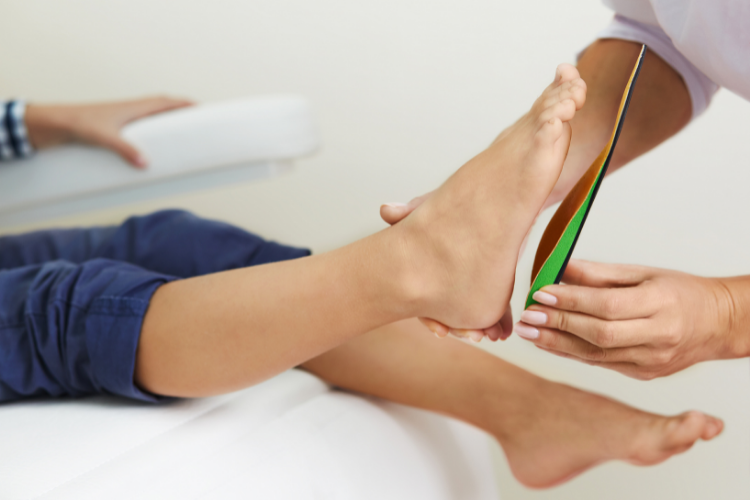
Orthoses, sometimes called orthotic devices or insoles, are specially designed inserts worn inside the shoes. They can be used to redistribute pressure, reduce stress or friction, support the foot and improve comfort during walking or other activities.
Orthoses are often used as part of a wider treatment or rehabilitation programme, which may also include exercises, stretches, footwear advice or changes to activity.
Over-the-Counter Orthoses
We stock a range of ready-made orthotic devices that can be adapted, where appropriate, to better suit your individual needs.
These devices are generally less expensive than custom-made orthoses and can be a suitable option for many foot and lower-limb problems. Their lifespan varies depending on the device, its materials, how frequently it is worn and the activities it is used for. Your podiatrist will advise you on the most suitable option and when it may need to be reviewed or replaced.
Custom-Made Orthoses
We can also provide custom-made orthoses that are individually prescribed following an assessment of your feet, symptoms, movement and footwear.
Your podiatrist will work with you to select a device that suits your needs. This may include considering whether the orthoses should be softer or firmer, the activities for which they will be worn and the types of shoes they need to fit inside.
Custom-made orthoses may require casts, impressions or digital measurements of your feet, depending on the type of device being prescribed.
What Conditions Might Orthoses Help With?
Orthoses may be useful in the management of a range of foot and lower-limb conditions, including:
Arthritis
Bunions, corns and calluses
Bursitis
Flat feet or high arches
Plantar fasciitis and heel pain
Tendinopathy
Overpronation or underpronation
Sports-related injuries
Pressure-related problems, including some diabetic foot ulcers
Rehabilitation following surgery
Whether orthoses are suitable will depend on your symptoms, footwear, activities and individual assessment.
Please bring the shoes in which you would most like to wear your orthoses. It is also helpful to tell your podiatrist about the activities you regularly take part in, such as running, squash or golf. This allows us to select the most appropriate style, shape and materials for your needs.
How Do Orthoses Work?
Orthoses can work in several ways, depending on their design and the condition being treated.
Ground Reaction Forces
Whenever we stand, walk or run, the ground pushes back against the feet. These forces are known as ground reaction forces.
Orthoses can alter how these forces and pressures are distributed across the feet. By reducing stress on painful or overloaded tissues, they may improve comfort and allow the foot and lower limb to function more effectively.
Sensory and Neuromuscular Effects
Orthoses may also influence the sensory information sent from the feet to the brain. This feedback can affect how the muscles of the feet and legs respond during walking or running.
This may help the body adjust its movement patterns, reduce strain on sensitive tissues and improve comfort. However, the precise way orthoses work can vary between individuals, and their effects are not always caused by a visible change in the position of the foot.
Will I Need to Wear Orthoses Forever?
Not necessarily. How long you need to wear orthoses will depend on your condition, symptoms and response to treatment.
Some people find that orthoses provide ongoing comfort and support and choose to continue wearing them long term. Others use them temporarily as part of a rehabilitation programme alongside exercises, stretches, footwear changes or activity modification.
Once your symptoms have improved, your podiatrist may advise gradually reducing how often you wear your orthoses. In some cases, continued use may be recommended to manage a long-term condition or prevent symptoms from returning.
